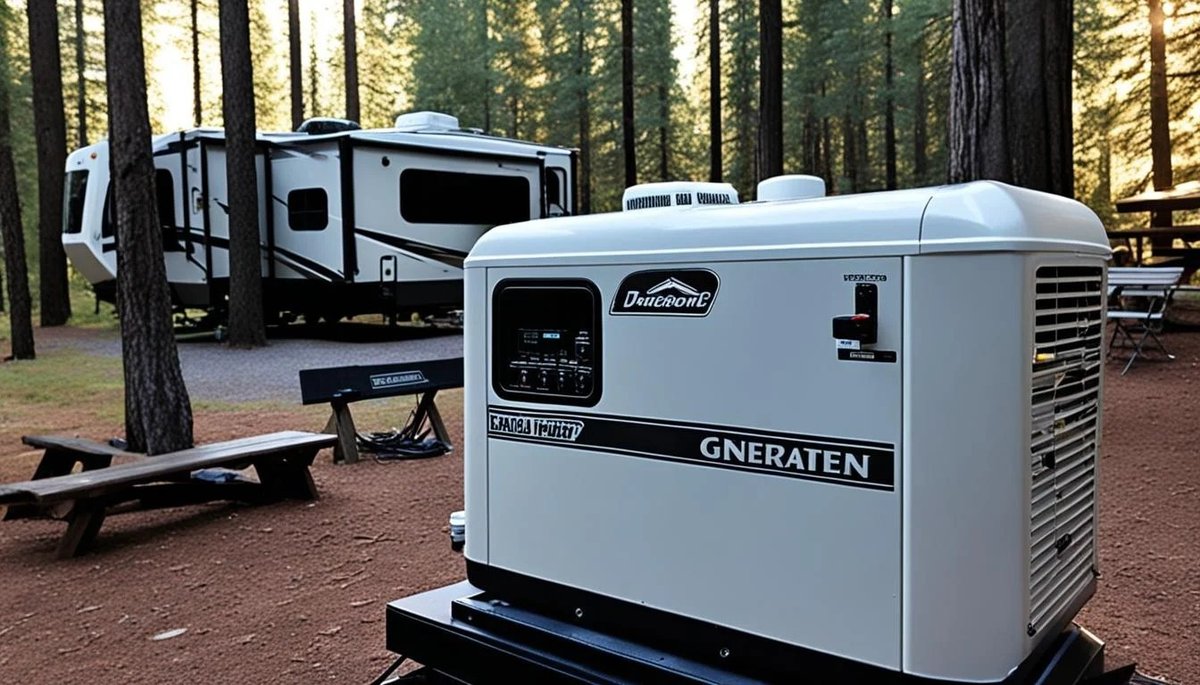
Embarking on an RV adventure means embracing freedom, but that freedom often comes with the need for reliable power far from conventional hookups. Whether you're boondocking in the wilderness or enjoying a quiet night at a national park, a good RV generator is your ticket to keeping the lights on, the fridge cold, and your devices charged. Choosing the right one, however, can feel like navigating a maze of wattages, fuel types, and decibel levels.
This comprehensive guide cuts through the noise, offering clear buying guides & reviews for RV generators that simplify your decision. We’ll arm you with the knowledge to pick a generator that not only fits your RV lifestyle but also offers peace of mind on the open road.
At a Glance: Your RV Generator Essentials
- Assess Your Power Needs First: Before anything else, list every appliance you might run simultaneously. Total their running and starting watts to find your minimum required generator size.
- Fuel Type Matters: Consider gasoline for wide availability, propane for cleaner burning and storage, diesel for heavy-duty long life, or battery/solar for silent, emission-free power. Dual-fuel options offer flexibility.
- Noise Level is Crucial: Inverter generators are generally quieter (50-60 dB) and often preferred for campgrounds. Traditional models can be much louder.
- Portability vs. Power: Larger generators offer more power but are heavier. Decide if you need a truly portable unit or a heavier, more stationary one.
- Inverter Technology: Essential for sensitive electronics (laptops, TVs) as it provides stable, clean power.
- Budget Accordingly: From best budget choices to premium buys, there's a generator for every wallet, but don't compromise on safety or essential features.
Navigating the Power Maze: What to Look for in an RV Generator
Picking an RV generator isn't a one-size-fits-all situation. Your ideal model hinges on your unique RV, the appliances you depend on, and how you plan to travel. Let's break down the critical factors that will guide your choice.
Understanding Power Output: Watts, Watts, and More Watts
The heart of any generator is its power output, measured in watts. This determines how many devices you can run simultaneously. It’s crucial to understand the different wattage terms to avoid under-powering your setup.
- Rated Wattage (Running Watts): This is the continuous power a generator can safely produce over time. It's the number you'll primarily use to match against your appliances' ongoing power consumption. Think of it as the generator's comfortable cruising speed.
- Starting Watts (Peak/Surge Watts): Many appliances, especially those with motors like air conditioners, microwaves, or refrigerators, require a significant surge of power for a few seconds to start up. This temporary boost is their starting wattage. Your generator needs to be able to handle these brief peaks. If your generator's starting watts are too low, those crucial appliances simply won't kick on.
How to Estimate Your Needs:
- List Your Appliances: Make a list of everything you might want to run at the same time.
- Find Running Watts: Look for the running wattage on each appliance's label. Sum these up for your total running wattage need.
- Identify Starting Watts: Find the highest starting wattage among your appliances. This is often the AC unit. Add this highest starting wattage to your total running wattage (minus the running wattage of that particular high-draw appliance) to get your overall estimated starting watt requirement.
- Add a Buffer: Always add a 10-20% buffer to both your running and starting watt estimates. It's better to have a little extra power than not enough.
For instance, light use (charging phones, small fans, LED lights) might only need 1,000-2,000 watts. Moderate use, adding a microwave or TV, pushes you into the 2,000-4,000-watt range. If you plan on running your RV's air conditioning unit, multiple appliances, or a robust entertainment system, you'll likely need 4,000 watts or more.
Fueling Your Adventure: Choosing the Right Type
The type of fuel your generator uses impacts everything from its operating cost to its environmental footprint and even where you can use it.
- Gasoline: The most common and widely available fuel type for portable generators.
- Pros: Generally cheaper upfront, easy to find at almost any gas station, and there's a vast selection of models.
- Cons: Gasoline degrades over time, requires stabilizers for storage, produces higher emissions, and can be noisier. Maintenance is also generally higher compared to other types.
- Propane (LPG): An increasingly popular choice for RVers due to its clean-burning nature.
- Pros: Burns cleaner with fewer emissions, has a much longer shelf life than gasoline (no degradation), and generators tend to be quieter. Good for extended storage.
- Cons: Propane offers less energy per gallon than gasoline, meaning you'll burn through it faster for the same power output. It also struggles in colder temperatures and requires external tanks, which means more space taken up in your RV setup. Finding propane can also be less convenient in remote areas compared to gasoline.
- Diesel: Known for its robustness and efficiency under heavy loads, diesel generators are often found in larger RVs or those with significant power demands.
- Pros: Highly fuel-efficient, especially when running under a heavy load, and diesel engines are designed for long lifespans. Diesel fuel is also safer to store than gasoline as it's less flammable, and it handles large loads with ease.
- Cons: Higher upfront cost, typically louder and heavier/bulkier than gasoline or propane units. In freezing temperatures, diesel can "gel," requiring additives or a heated storage solution.
- Dual-Fuel: These versatile generators can run on either gasoline or propane, offering the best of both worlds.
- Pros: Unmatched flexibility. If you run out of one fuel type, you can switch to the other, making them excellent for varied trips or emergency preparedness.
- Cons: Often heavier and more expensive than single-fuel models, and you'll still need to carry both fuel types if you want to leverage their full versatility.
- Tri-Fuel: Taking versatility a step further, tri-fuel generators can operate on gasoline, propane, or natural gas. While natural gas isn't typically practical for portable RV use unless you have a direct hookup at a specific site, it offers maximum flexibility for home backup or long-term stationary use.
- Battery-Powered (Portable Power Stations): These are essentially giant batteries, often paired with solar panels for recharging. They're a fantastic choice for those prioritizing quiet operation and environmental friendliness.
- Pros: Completely silent, zero emissions, and no need to store flammable fuels. Ideal for quiet campgrounds, solar setups, and off-grid living.
- Cons: Generally have a higher upfront cost, and their continuous output is often lower than fuel-based generators unless you invest in massive, expensive systems. Recharging can be weather-dependent if relying on solar, and they're not always ideal for running very high-draw appliances without significant battery capacity.
Fuel Efficiency & Run Time: How Long Can You Go?
Nobody wants to constantly refuel. Good fuel efficiency means longer run times on a single tank, translating to less hassle and more uninterrupted power. Look for generators that offer 8-10 hours of operation at 50% load as a benchmark. Metrics like GPH (gallons per hour) or listed run time at specific loads will give you a clearer picture. Your generator's runtime can also be extended with regular maintenance, ensuring optimal oil levels, and healthy ventilation. For more insights on maintaining your portable power source, consider checking out this comprehensive guide to RV generators.
Noise Level: Keep the Peace
Generator noise is measured in decibels (dB), and it’s a critical factor, especially if you plan to camp in quiet areas or abide by campground regulations.
- Inverter Generators: These are the champions of quiet operation, typically ranging from 50 dB to 60 dB. To put that in perspective, 50 dB is about as loud as a quiet conversation or a refrigerator hum.
- Conventional Generators: Often much louder, exceeding 70 dB. This can be disruptive to neighbors and your own peace and quiet.
Always check the decibel rating before you buy. Some campgrounds have strict noise limits, often around 60 dB, so an inverter generator might be your only option.
Portability: Haul it or Mount it?
How often will you move your generator? Where will you store it?
- Smaller, Lighter Units: Generators weighing 30-50 pounds are genuinely portable, often featuring built-in handles. These are great for quick trips or when space is at a premium.
- Larger, Heavier Units: Generators over 100 pounds typically come with wheels and sometimes telescoping handles to aid transport, but they are still substantial. Consider if you'll be able to load and unload it from your RV without assistance. If your generator is heavy, think about a mounting frame for your RV bumper or a dedicated storage compartment.
Inverter Technology: Clean Power for Sensitive Devices
This is a non-negotiable feature if you plan to power sensitive electronics like laptops, smartphones, or modern flat-screen TVs.
- Inverter Generators: Produce "clean sine wave" power, which is stable and free of voltage spikes that can damage delicate devices. They're also generally more fuel-efficient and quieter.
- Conventional Generators: Produce "modified sine wave" or "square wave" power, which can be inconsistent and potentially harmful to electronics.
While inverter generators are typically more expensive, the protection they offer for your valuable gear is often worth the investment.
Ports and Outlets: Connecting Your World
Before you buy, confirm the generator has the right outlets for your RV and appliances.
- AC Outlets (120V/240V): Standard household outlets for most appliances.
- 30A RV Outlet: Essential for connecting directly to your RV's electrical system (often a twist-lock L5-30R or TT-30R receptacle), handling up to 3,600 watts.
- 20A Outlets: Standard wall outlets for smaller appliances, up to 2,400 watts.
- DC Output (12V) / Car Port: Useful for charging vehicle batteries or running 12V accessories.
- USB-A/C Ports: Convenient for charging phones, tablets, and other small electronics directly.
- Anderson Ports: Found on some portable power stations for high-current DC connections, often for solar panels.
Durability & Safety Features: Built for the Road
Your generator needs to withstand the rigors of RV life. Look for:
- Robust Housing: Metal or reinforced plastic construction.
- Weatherproofing: Covered outlets and controls.
- Overload Protection: Automatically shuts off if too many devices are connected.
- Low-Oil Shutoff: Prevents engine damage by turning off the generator if oil levels drop too low.
- CO Sensor: A crucial safety feature that detects dangerous carbon monoxide levels and shuts down the generator (especially important for enclosed spaces, though generators should always be used outdoors).
- Circuit Breakers: Protects the generator and connected devices from power surges.
Top RV Generators Reviewed: Finding Your Perfect Match
Now that you know what to look for, let's dive into some of the market's leading RV generators, highlighting their strengths and ideal use cases based on our research.
Best Overall Value & Performance: Champion Power Equipment 4500W Inverter
The Champion 4500W inverter generator strikes a fantastic balance between features, performance, and price, making it a favorite among RVers.
- Power: Offers 4500 starting watts and 3700 running watts, capable of handling most single RV AC units (up to 15,000 BTU) and common appliances.
- Features: Includes a built-in 120V 30A RV outlet (TT-30R) for direct plug-and-play with your RV. The wireless remote start, operable from up to 80 feet away, is a game-changer for convenience.
- Noise: Operates at a respectable 61 dBA, which is quieter than many conventional generators but slightly higher than the quietest inverters.
- Portability: Its weight can be a drawback for some, but it does come with wheels.
- Expandability: An add-on parallel kit is available, allowing you to link a second unit for double the power if your needs grow.
This generator is an excellent choice for a wide range of RVers looking for reliable power without breaking the bank, offering premium features usually found in more expensive models.
Best Premium Buy: EcoFlow Delta Pro Ultra
For those seeking the pinnacle of silent, sustainable power, especially for high-demand, luxury setups or serious off-grid living, the EcoFlow Delta Pro Ultra is an unparalleled option.
- Power & Capacity: A battery-powered portable power station, it boasts an impressive 7,200W continuous output, expandable from a substantial 6 kWh up to a colossal 90 kWh battery capacity. This means it can power virtually anything in a high-end RV.
- Charging Versatility: Recharges via multiple sources: solar (up to 5.6 kW input for rapid charging), AC/shore power, a gas generator (if you need a backup), or even an EV charging station. This makes it incredibly flexible for various charging scenarios.
- Operation: Completely silent and produces zero emissions, making it perfect for quiet zones and environmentally conscious travelers.
- Considerations: Its primary drawback is the high upfront cost, positioning it firmly in the premium category. It's an investment, but one that pays off in ultimate quiet, reliability, and eco-friendliness.
Best for Solar Setups: Jackery Solar Generator 3000 Pro
If your RV lifestyle leans heavily into solar power and off-grid boondocking, the Jackery Solar Generator 3000 Pro offers a robust, solar-ready solution.
- Power & Design: Offers a similar output to the Champion (around 3000W running, higher peak) but excels in its integration with solar. It features a strong "port game" with multiple outlets, USB ports, and a car port.
- Solar Optimization: Capable of a full recharge in a remarkable 3–4 hours in good sun when paired with Jackery SolarSaga panels. This rapid charging capability is a huge advantage for extended off-grid stays.
- Portability: Designed with rough terrain wheels and a telescoping handle, it’s built for mobility across various landscapes, making it ideal for adventurous boondockers.
- Ideal User: Perfectly suited for those who want to maximize their solar input and require a reliable, portable power station that can quickly replenish its reserves using renewable energy.
Best Budget Choice: Genkins GK2300i Inverter Generator
For RVers and campers who need reliable power without a hefty investment, the Genkins GK2300i presents a compelling budget-friendly option.
- Power & Engine: Powered by a 79cc 4-stroke OHV engine, it delivers 1900W running capacity, sufficient for basic RV needs like lights, charging, and small appliances.
- Noise & Weight: Rated at about 53 dBA, it's impressively quiet, comparable to much more expensive inverter generators. It's also remarkably light, coming in at about half the weight of the Champion model, enhancing portability.
- Expandability: Offers an optional parallel kit, allowing you to connect two units for increased power down the line.
- Considerations: Its "port game" is weaker than competitors, meaning fewer outlet options. As a less established brand, its long-term reliability might not be as proven as Honda or Champion, but for its price point, it delivers excellent value.
Other Notable Mentions:
- Honda 664240 EU2200i Portable Inverter Generator: A gold standard for reliability and quiet operation. With 2200 watts, it’s perfect for moderate use (48-57 decibels). Its GXR120 Commercial Series engine is legendary for dependability. Downsides include a small 0.95-gallon fuel tank requiring frequent refills, but it can be paralleled for more power.
- Westinghouse 12500 Watt Dual Fuel Portable Generator: A beast for heavy-duty applications. Offers 9500 running watts (gas) / 8500 (propane) and 12500 peak watts (gas) / 11200 (propane). Features dual fuel, up to 12 hours runtime, and remote start. At 210 pounds, it's cumbersome for transport but fantastic for stationary high-power needs.
- Westinghouse 14500 Peak Watt Tri-Fuel Portable Generator: An even larger powerhouse, providing 14,500 peak watts on gasoline and 12,000 watts on natural gas. Its tri-fuel capability (gasoline, propane, natural gas) offers maximum fuel flexibility. With up to 19 hours of runtime and safety features like overload protection and a CO sensor, it's built for serious demands, but at 230 pounds, it's a fixed solution rather than a portable one.
RV Generator FAQs & Actionable Insights
Even with a detailed buying guide, a few common questions always surface. Here are crisp answers to help you navigate specific scenarios.
How Long Can an RV Generator Run Continuously?
Most portable RV generators are designed for continuous operation ranging from 8 to 20 hours on a full tank, depending on the load and fuel efficiency. To maximize uptime and prolong the life of your generator, always ensure it has adequate oil levels, is well-ventilated, and undergoes regular maintenance. Never let it run completely dry of oil.
Where Should I Place My RV Generator?
Safety first! Always position your generator 5-10 feet away from your RV, any windows, or other structures. Place it on dry, level ground to ensure stable operation and prevent tipping. This distance helps dissipate exhaust fumes and noise effectively. Consider using a generator mat underneath to catch any potential fuel drips and a generator tent or canopy for protection from light rain while ensuring ample airflow.
Can My RV Generator Operate in the Rain?
Many RV generators can operate in light rain, but they require protection to prevent water from entering electrical components or the engine. A dedicated generator cover, tent, or canopy can provide this, but it’s absolutely critical that any cover allows for abundant airflow to prevent overheating and the dangerous buildup of carbon monoxide. Never operate a generator in heavy rain, and always elevate it off wet ground to avoid electrical hazards. If you're unsure, consult your generator's manual for specific guidelines on weather protection.
How Much Power (Wattage) Do I Really Need?
This is perhaps the most critical question. Here’s a quick guide based on typical RV usage:
- 2,000–2,500W: Ideal for basic needs – running lights, charging phones, a fan, and perhaps a TV. This size is usually sufficient for smaller RVs or minimalist campers.
- 3,000–4,500W: This is the sweet spot for many RVers. It can handle one air conditioning unit (typically 13,500-15,000 BTU), a microwave, and other high-draw appliances simultaneously.
- 5,000W+: Necessary for larger luxury RVs, those with dual AC units, multiple water heaters, or high-demand setups that mimic a full home experience.
Actionable Tip: Don't guess! Before you buy, go through your RV and list every appliance you might use. Note both their running watts and starting watts. Add up the running watts for everything you anticipate using at once, then identify the single highest starting watt appliance. Your generator's total starting watts should be able to handle that peak. Always add a 10-20% buffer for safety and future needs. A slightly oversized generator is always better than an undersized one.
Powering Your Adventures Confidently
Choosing an RV generator doesn't have to be overwhelming. By understanding your power needs, weighing the pros and cons of different fuel types, and considering factors like noise, portability, and safety features, you can confidently select a model that enhances your RV experience. From quiet inverter generators perfect for sensitive electronics and campgrounds to powerful dual-fuel workhorses for heavy loads, there's a perfect match for every RVer.
Remember, the goal is uninterrupted freedom on the road, and the right generator is a key part of that equation. Invest wisely, and your RV adventures will always be powered up and ready to roll.